


 Contact support


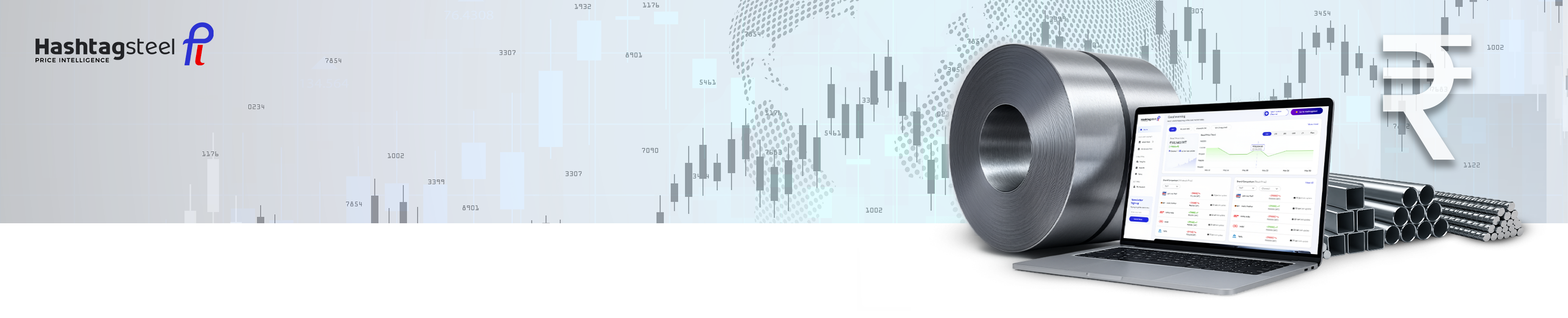
Why Steel Prices in India Are So Hard to Track And How Hashtagsteel Pi Changes That
Ask any steel buyer in India about steel pricing, and you will hear the same story. We call three or four suppliers. Ask price for the same grade, the same brand, the same quantity. End up getting three or four different prices, often with little explanation for the gap.
This is not a minor inconvenience. For contractors, fabricators and procurement teams working on tight margins, an unexplained price difference of a few thousand rupees per tonne can decide whether a project turns a profit or loss.
What makes this stranger is the backdrop. India's steel industry is growing fast. Production, capacity, and consumption have all climbed steadily over the past few years. Yet one basic piece of market infrastructure has not kept pace: price transparency. Buyers still cannot check the exact steel price today, the way they can check the price of petrol or gold.
Why Online Steel Price Transparency Matters
Steel prices move for the same reason most commodity prices move: supply and demand, shifting daily.
A useful comparison is the vegetable market. No authority sets the price of tomatoes each morning. It is set by what arrives at the market and what buyers are willing to pay that day. Steel behaves in much the same way, reacting to raw material costs, demand cycles, freight, and regional supply. The difference is visibility. Vegetable prices are announced publicly and reported daily. Steel prices are rarely published anywhere where buyers can easily check them.
Because that data is not centralised or published, buyers are left calling around, comparing verbal quotes, and hoping the number they are given is close to the actual market rate. There has been no reliable way to verify it independently.
This gap between what buyers need to know and what they are able to find out is the problem Hashtagsteel set out to address. Hashtagsteel is currently the only dedicated platform for steel in India offering online mild steel prices, tracking more than 15 products and procuring it from trusted suppliers. Over time, it became clear that daily prices were not enough. Buyers also wanted historical trends, a way to compare wholesale and retail rates, and informed commentary on carbon steel products generally from industry experts, not price figures in isolation.
What Is Hashtagsteel Pi?
Hashtagsteel Pi (Price Intelligence) is a steel price data platform built to give steel buyers real-time, region-wise pricing information across multiple steel products, rather than the single-point-in-time quotes they currently rely on.
The platform is built around a few core capabilities:
Live steel prices. Real-time pricing data across regions and products, so buyers can check current market rates before negotiating rather than after.
Price trends. Weekly and monthly movement data, allowing buyers to see whether prices are trending up or down and time purchases accordingly.
Wholesale versus retail pricing. A direct comparison between manufacturer-level and retail-level pricing, useful for understanding where markups occur and where there is room to negotiate.
Market insights. Analysis explaining what is actually driving day-to-day price changes, rather than leaving buyers to guess at the cause.
Curated industry news. Relevant updates filtered from the wider stream of steel and commodity news, aimed at helping buyers respond to market shifts without having to track every source themselves.
Who the Price Intelligence Platform Is Built For
Price intelligence of this kind is relevant to a fairly broad set of people across the steel value chain: retail and wholesale buyers, procurement managers, traders, builders, civil and PEB contractors, fabricators, manufacturers, distributors, and business owners who sign off on material budgets.
Hashtagsteel Pi is offered on Basic and Premium plans, structured around how much depth of data different users typically need, from someone checking daily rates to someone tracking trends and analysis across a wider set of products.
What Buyers Can Do With Pi
Access to consistent, verifiable pricing data changes how procurement decisions get made. In practical terms, it allows buyers to:
- Time purchases against known price trends rather than guesswork
- Identify when a quoted price is out of line with the market
- Plan procurement budgets with a clearer reference point
- Enter supplier negotiations with independent data, not just the supplier's own figures
- Reduce the uncertainty that comes with a market where prices are not publicly reported
Over time, this kind of visibility tends to translate into better project margins, simply because buyers are working from information rather than assumptions.
By @Ajith Kumar on Tuesday, 25 August 2026